Erna
Jun 16, 2026
Writer – Nidhi Dharme
Erna is a circular fashion brand that transforms upcycled denim and discarded materials into wearable art with a soul. Inspired by the rugged durability of the Pacific Northwest and the whimsical handcrafted spirit of Indian slow fashion, Erna's "Re Love, Re Imagine" project turns old jeans and fabric scraps into silhouettes designed to be twirled in, danced in, and passed down. At the heart of the brand is a rejection of the "boring sustainability" trap, Erna is not a green version of a mall brand; it's fashion with a pulse, visually loud, and ethically sound. Every piece is built through intentional couture surgery, where each stitch is a conscious decision, not a production-line afterthought. For the woman who wants a wardrobe that speaks both her ethics and her personality. Explore Erna's circular fashion collections on Cop&Drop, where Indian slow fashion finally gets the creative stage it deserves.
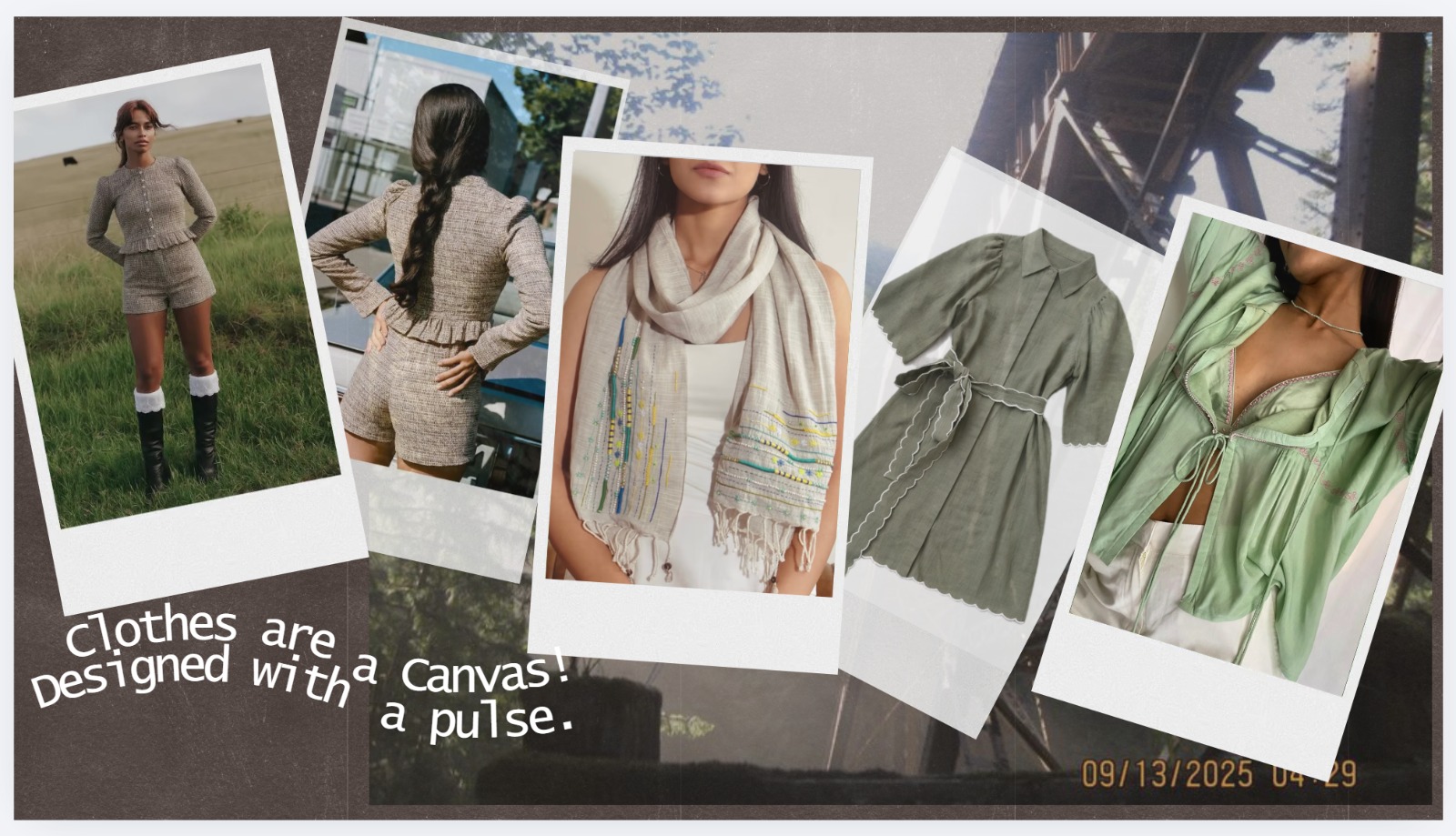
We are currently living through a period of extreme sustainability fatigue. One day it’s the global template of the Eco Warrior in stiff, unbleached linen; the next it’s a hyper niche, Clean Girl aesthetic that feels more like a sterile lab report than a wardrobe. In the middle of this constant noise, we’ve lost the most human part of getting dressed: the actual joy of a garment that has already lived a life. Most conscious fashion today falls into two traps. It’s either so basic that it feels like a uniform for a cult, or it’s so expensive and delicate that you’re afraid to actually move in it. The gap in the market isn't for more organic basics; it’s for clothes that carry a history. It’s about pieces that fit into the messy, non linear reality of our day to day life—the coffee spills, the long walks, and the spontaneous dancing while carrying enough Main Character energy to feel like art. This category is about a specific kind of optimism. It’s for the person who wants a wardrobe that is ethically sound but visually loud. We’re talking about upcycled denim and handcrafted fabrics that don't just sit on the body but respond to it. It’s a move away from the disposable mindset of the high street toward a design process that is circular, honest, and slightly whimsical. Just like a real person.
When you strip away the greenwashed marketing and the recycled tags, you’re left with the actual architecture of the garment: the swing of a skirt, the weight of a seam, and the grit of the fabric. A truly great piece of slow fashion shouldn’t just be good for the planet; it should be an engineering feat of movement. In an era where most brands design for a static photo on a grid, we need clothes designed for the ground and for the air. This is where the Pacific Northwest influence meets Indian craftsmanship. It’s the creation of silhouettes that are specifically designed to be twirled in. It’s about volume that isn't heavy and structure that doesn't feel like a cage. Take a pair of vintage jeans, for example. In the wrong hands, they’re just waste. But in a circular design process, they become a canvas. This mirrors the philosophy of Re Love, Re Imagine where the denim is deconstructed and rebuilt into something entirely new. It’s a reminder that there is beauty in the old, the frayed, and the faded. The end result should feel ethereal and light, even if the material itself started as something rugged and lived in. It’s fashion that understands that our best days are usually the ones where we feel free enough to move without thinking.
The change the industry needs right now is a rejection of the New. We don’t need more virgin resources; we need better imaginations. Building a circular brand requires a specific type of patience. It’s about looking at a pile of discarded material and seeing a landscape. It’s about being less attached to perfection and more focused on the storytelling potential of a frayed edge or a hand stitched detail. When a product goes from being a scrap to a finished garment, it’s a journey of resurrection. It starts with sourcing materials that have already stood the test of time, followed by a process of Couture Surgery where every stitch is intentional. It involves sampling, moving in the piece, and making sure the twirl feels right. It shouldn't be launched because a trend report says so; it should be launched because it’s a piece of art that’s ready to be worn. This slow, circular approach creates clothes that people actually keep, not replace the moment the next core trend arrives. It’s about building a relationship between the past life of the fabric and the future life of the wearer something fast fashion simply cannot offer.
This is exactly where Erna finds its niche. The brand is a direct response to the frustration of boring sustainability. Erna’s process is a reflection of a creative circle, blending the rugged durability of the Pacific Northwest with the whimsical, handcrafted soul of Indian slow fashion. At the heart of the brand is the Re Love, Re Imagine project, where upcycling isn't just a buzzword but a transformation of old denim and discarded materials into wearable art. Erna isn’t interested in selling you a green version of a mall brand dress; they are interested in the intentional joy of wearing something that has a soul. It’s fashion designed with a pulse, meant to be lived in, danced in, and passed down not just scrolled past. If you're ready to exit the linear loop and step into a story, look local. The circle starts here.
.
Erna is built on circular fashion, the idea that discarded materials and old denim carry more potential thanvirgin resources. Their "Re Love, Re Imagine" project transforms scraps into wearable art through a process called "couture surgery," where every stitch is intentional.
It's Erna's core upcycling initiative — taking discarded denim and fabrics that have already lived a life, deconstructing them, and rebuilding them into new silhouettes that are light, ethereal, and designed for movement. Upcycling isn't a buzzword here; it's a transformation.
Yes. Erna uses no virgin resources — only upcycled and pre-existing materials. The design process is circular,the fabrics are handcrafted, and the brand rejects the disposable mindset of fast fashion entirely