How Creator Led Brands Are Changing Indian Commerce
Writer – Nidhi Dharme
Indian creators are no longer just influencers—they're building brands. Here's why creator-led businesses are becoming the future of commerce.
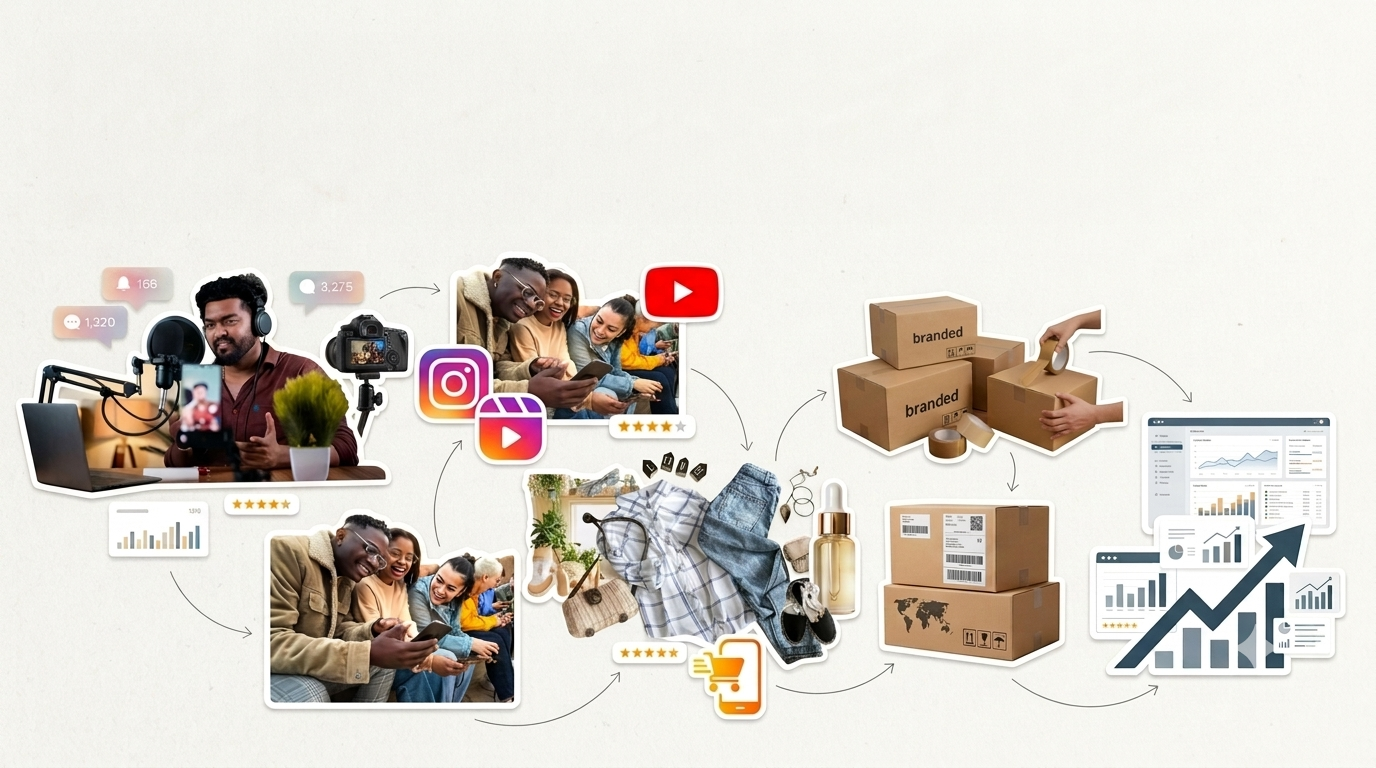
For most of the last decade, the relationship between an Indian creator and a consumer brand followed one script: the brand existed first, and the creator was hired afterward to talk about it. That script has been rewritten entirely. Today's creators are no longer just influencing purchase decisions; they are building the products themselves, owning distribution, shaping brand narratives, and cultivating communities that behave less like audiences and more like highly engaged consumer ecosystems.
India's influencer marketing industry is expected to reach ₹3,375 crore by 2026. The larger creator economy is expected to grow even faster, adding new internet-first product brands, services, and micro businesses. That growth isn't being driven primarily by brands paying creators more for endorsements. It's being driven by creators deciding endorsement income has a ceiling and brand ownership doesn't.
Some of the most successful creator-led launches in India have not necessarily succeeded because the products were radically different. They succeeded because the storytelling, trust, and audience alignment were already established before the product even existed. This is the single biggest structural advantage creator-led brands have over traditional startups. One of the biggest challenges for any direct to consumer brand is the rising cost of digital ads. Creator startups are solving this problem by using their own platforms as the primary marketing channel. Because they produce engaging content, they do not have to pay for every eye that sees their product. A traditional D2C founder spends the first eighteen months of a brand's life trying to build an audience from zero. A creator-led brand starts with the audience already assembled, already trusting the founder's voice, and already primed to convert.
A number of D2C brands have grown without following the traditional launch script. Instead of starting with large campaigns, they began by showing up in conversations people were already having on Instagram, YouTube, and a growing list of creator-led platforms. Influencers weren't brought in later to amplify awareness; they were there from the beginning, shaping how these brands were seen and understood. Mamaearth's early growth followed exactly this pattern, and it became the reference case that an entire generation of Indian founders studied closely. The lesson wasn't "use influencers in your marketing." It was "build the brand and the audience relationship simultaneously, through the same voices, from day one."
Indian influencers are now evolving into brand founders, merging creativity with entrepreneurship. Most influencer clothing brands begin as community-driven merch collections before expanding into lifestyle products. What's notable about the current wave is how quickly creators move past simple merchandise into genuine product categories, skincare, nutrition, fashion, home goods — built with real supply chains, real quality control, and real long-term brand thinking, not just a logo printed on a T-shirt.
As influencer brands in India become more mainstream, scrutiny around advertising standards, financial disclosures, and product quality is increasing. There is also the risk of over-reliance on personal branding; if the influencer's reputation falters, so does the business. This is the structural weakness baked into the model. A creator-led brand's biggest asset, the founder's personal trust with their audience is also its single point of failure. Traditional brands can survive a CEO scandal. A creator-led brand often cannot survive the creator's reputation collapsing, because the brand and the person were never really separate things.
What makes the Indian market particularly fertile for creator led D2C businesses is the convergence of three powerful forces: massive digital consumption, low barriers to commerce infrastructure, and the emotional intimacy creators have built with their audiences. India's creator economy isn't following the American playbook, it's building its own. India's creator economy version is more grassroots and individual led, with creators building multi income ecosystems encompassing revenue from content, merchandise, events, and product lines. Indian creators are living their brand stories and connecting through real relatability rather than ad budgets, and that deep community engagement is precisely where the power lies. This shift is also where the homegrown brand movement and the creator economy genuinely intersect. The platforms built to surface honest, founder-led Indian brands — like Cop&Drop — are the natural home for exactly this kind of business: people who built trust first and a product second.
.
A creator-led brand is a business founded and primarily driven by a content creator or influencer, who uses their existing audience as the brand's core customer base rather than building awareness from scratch through advertising.
India's influencer marketing industry alone is projected to reach ₹3,375 crore by 2026, with the broader creator economy — including creator-led product brands — growing even faster.
Creator-led brands start with built-in trust and an existing engaged audience, which dramatically reduces customer acquisition costs compared to traditional startups that must build brand awareness from zero.
Over-reliance on the creator's personal reputation is the biggest risk. If the creator faces controversy or loses relevance, the business built around their personal brand can suffer significantly.
It's difficult but not impossible. Brands that build genuine operational and product infrastructure beyond the founder's personal brand have a better chance of surviving leadership changes than those entirely dependent on one person's image.
While influencer-led businesses exist globally, India's version is described by industry analysts as more grassroots and individual-led, with creators building diversified income across content, products, and events rather than following a single Western playbook.