Kolhapuri Chappals: The Footwear That Outlived Trends, Empires, and Fast Fashion
Writer – Nidhi Dharme
Before sneakers became collectibles and luxury brands turned footwear into status symbols, India already had a design that solved comfort, durability, and style in one stroke…..centuries ago. The Kolhapuri chappal wasn’t born in fashion studios or trend forecasts. It emerged from the villages of Maharashtra and Karnataka, shaped by climate, terrain, and necessity. Designed to survive the harsh heat of the Deccan Plateau and long walking distances, these sandals were never meant to be seasonal. They were built to last and that’s exactly why they still exist today. In an era dominated by fast fashion and disposable footwear, the Kolhapuri chappal stands as something rare, a product that has remained relevant for over 800 years without needing reinvention.
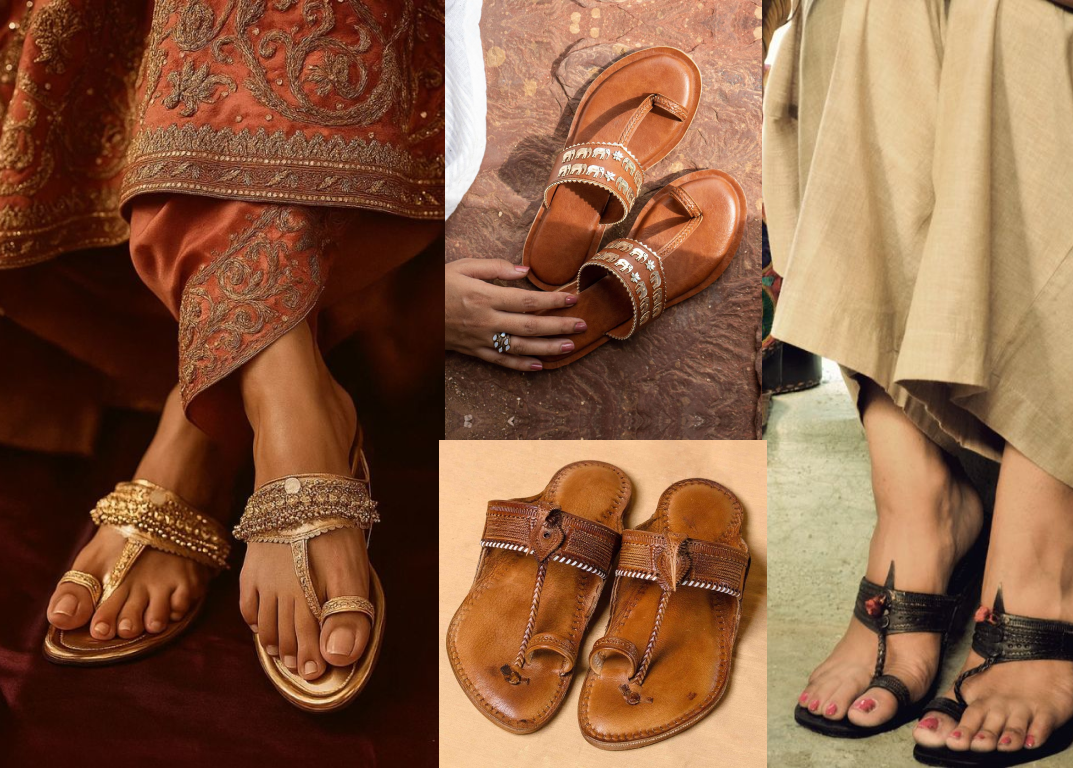
Before sneakers became collectibles and luxury brands turned footwear into status symbols, India already had a design that solved comfort, durability, and style in one stroke…..centuries ago. The Kolhapuri chappal wasn’t born in fashion studios or trend forecasts. It emerged from the villages of Maharashtra and Karnataka, shaped by climate, terrain, and necessity. Designed to survive the harsh heat of the Deccan Plateau and long walking distances, these sandals were never meant to be seasonal. They were built to last and that’s exactly why they still exist today. In an era dominated by fast fashion and disposable footwear, the Kolhapuri chappal stands as something rare, a product that has remained relevant for over 800 years without needing reinvention.
What makes Kolhapuris unique is not just their cultural identity, but their engineering. Every element serves a purpose. The flat sole distributes body weight evenly, making it suitable for long hours of walking. The open structure allows ventilation, which is especially suited for Indian summers. Unlike modern shoes that rely on synthetic cushioning, Kolhapuris depend on natural leather flexibility that improves with use. Originally worn by farmers, traders, and Maratha warriors, these chappals were made to handle rough ground, heat, and daily wear without breaking down. Over time, what started as practical footwear quietly evolved into a style symbol worn across generations. Few fashion items can claim this kind of uninterrupted relevance.
A genuine Kolhapuri chappal carries small imperfections and that’s exactly what makes it valuable. Each pair is handcrafted using vegetable tanned leather, a slow and chemical free process that gives the leather its strength and distinctive texture. Traditional Kolhapuris are assembled without nails, relying instead on interlocking leather techniques and precise stitching that artisans learn over decades. One detail most people overlook is the characteristic sound, the subtle creak or crunch while walking. It’s not a flaw, it’s proof of real leather and traditional curing methods. Unlike factory made footwear, Kolhapuris don’t feel perfect on day one. They soften gradually, adapting to the wearer’s foot shape. Over time, they stop feeling like footwear and start feeling personal, molded by movement, weather, and use. This relationship between product and wearer is something fast fashion rarely offers.
Behind every Kolhapuri is an artisan family that has often practiced the craft for generations. The production process is slow, manual, and deeply skill-based, which is why authentic pairs cannot be mass produced cheaply. In recent years, as global fashion moves toward sustainability, Kolhapuris have quietly become an example of what slow fashion actually looks like. Natural materials, long product life, repairability, and local craftsmanship, principles that the modern industry is trying to rediscover, have always been part of this footwear. Buying a genuine pair doesn’t just mean purchasing sandals. It means supporting an ecosystem of traditional craftsmanship that survives largely through word of mouth and conscious consumers.
For a long time, Kolhapuri chappals were boxed into a single category “traditional wear.” That perception is changing fast. Today, stylists and designers are pairing them with relaxed denim, oversized shirts, linen trousers, and even structured blazers. Women are styling them with summer dresses and contemporary silhouettes, while newer versions experiment with metallic finishes, bold colors, and cushioned soles. What makes Kolhapuris relevant today is their versatility. They sit comfortably between heritage and modern fashion, making them one of the few Indian footwear styles that transition seamlessly from cultural events to urban everyday wear. It’s no longer about dressing ethnic. It’s about dressing authentic.
One of the biggest misconceptions around Kolhapuris is that they are uncomfortable. The truth is simpler, they require a break-in period. Because the leather is natural and untreated by heavy chemicals, it takes a few wears to soften. Once it does, the chappal adapts to your foot structure in a way synthetic footwear cannot. Many long time users describe them as becoming more comfortable with age rather than wearing out. In a world used to instant comfort, Kolhapuris reward patience.
At Cop&Drop, we ‘Cop’ the durability, heritage, and slow fashion philosophy behind the Kolhapuri chappal. Few products manage to combine cultural history with everyday practicality this effortlessly. Supporting the artisans who keep this centuries-old craft alive isn’t just a purchase — it’s a statement. What we ‘Drop’ is the outdated idea that Kolhapuris belong only with kurtas or festive wear. Today, they belong wherever personal style meets confidence. Because if something has survived centuries of changing trends, it probably doesn’t need validation from fashion cycles. So the question is simple — are you sticking with the classic tan, or waiting for the modern reinterpretation?